Highlights
- Water damage can lead to mold growth inside wall cavities, where it often goes unnoticed for weeks or months.
- Hidden leaks from plumbing, roofs, appliances, and air conditioning systems are common sources of moisture.
- Musty odors, stains, bubbling paint, and soft drywall can signal mold behind walls.
- Drying wet materials quickly is critical to preventing mold after a water event.
- Painting over stains or opening walls without proper containment can make mold problems worse.
- Trident Restoration provides 24/7 water and mold restoration throughout Riverside and the Inland Empire.
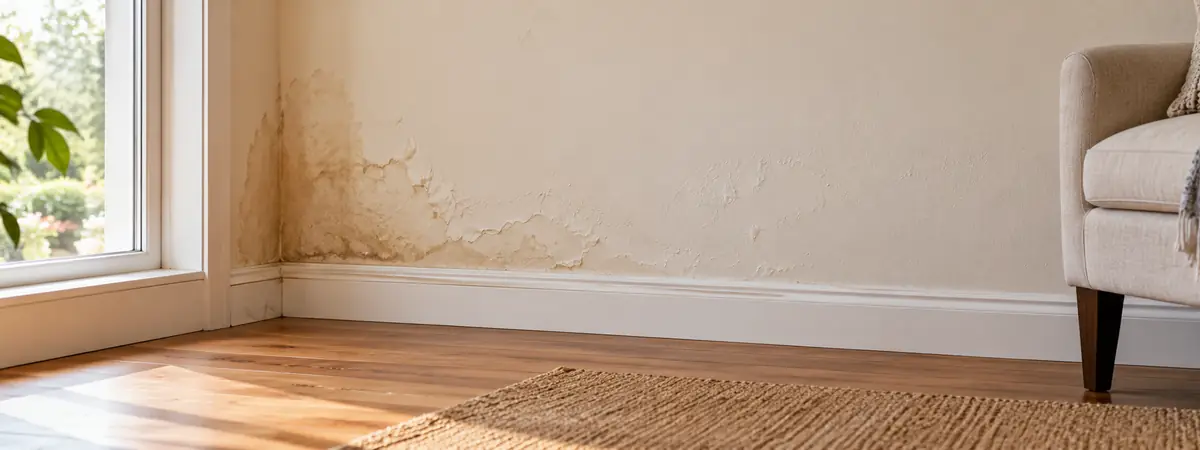
A small leak or a single plumbing failure might seem like a minor inconvenience once the visible water is cleaned up. Unfortunately, what you can’t see can cause far bigger problems. When water seeps into drywall, insulation, and wood framing, it creates an ideal environment for mold to grow behind your walls, often without any obvious warning signs at first.
Water and mold problems are common enough that an entire industry has grown to address them. According to IBISWorld, there are 57,615 damage restoration service businesses in the U.S. as of 2026. Homeowners rely on these professionals because hidden damage is difficult to find and even harder to resolve without the right equipment.
Understanding how water damage leads to hidden mold can help you act quickly and protect your home. Below, we’ll explain how mold develops inside walls, what signs to watch for, and why professional help makes such a difference.
Understanding How Water Damage Leads to Hidden Mold
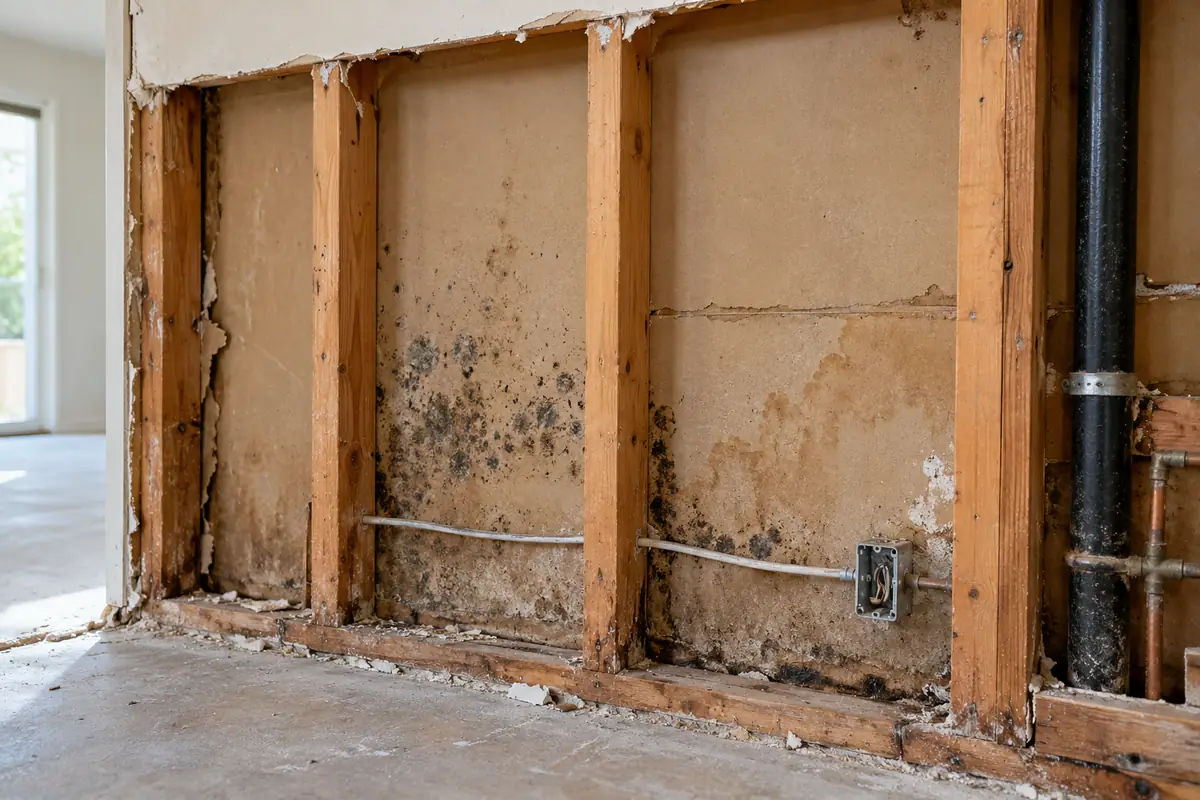
Mold spores are naturally present almost everywhere, both indoors and outdoors. They remain inactive until they find the moisture and organic material they need to grow. Wall cavities provide both, especially after water damage.
Drywall, wood framing, and insulation contain materials that mold can feed on. When these materials stay damp, mold can begin growing on surfaces hidden from view. Because wall cavities are dark and have limited airflow, moisture can linger long after the visible water is gone, giving mold plenty of time to spread.
Surface drying can also be misleading. A wall may feel dry to the touch while moisture remains trapped inside. That’s why hidden mold often develops even after homeowners believe the problem has been resolved.
Identifying Common Sources of Hidden Moisture
Many of the leaks that lead to mold behind walls start out small and go unnoticed. Even in a dry climate like the Inland Empire, homes face several common sources of hidden moisture.
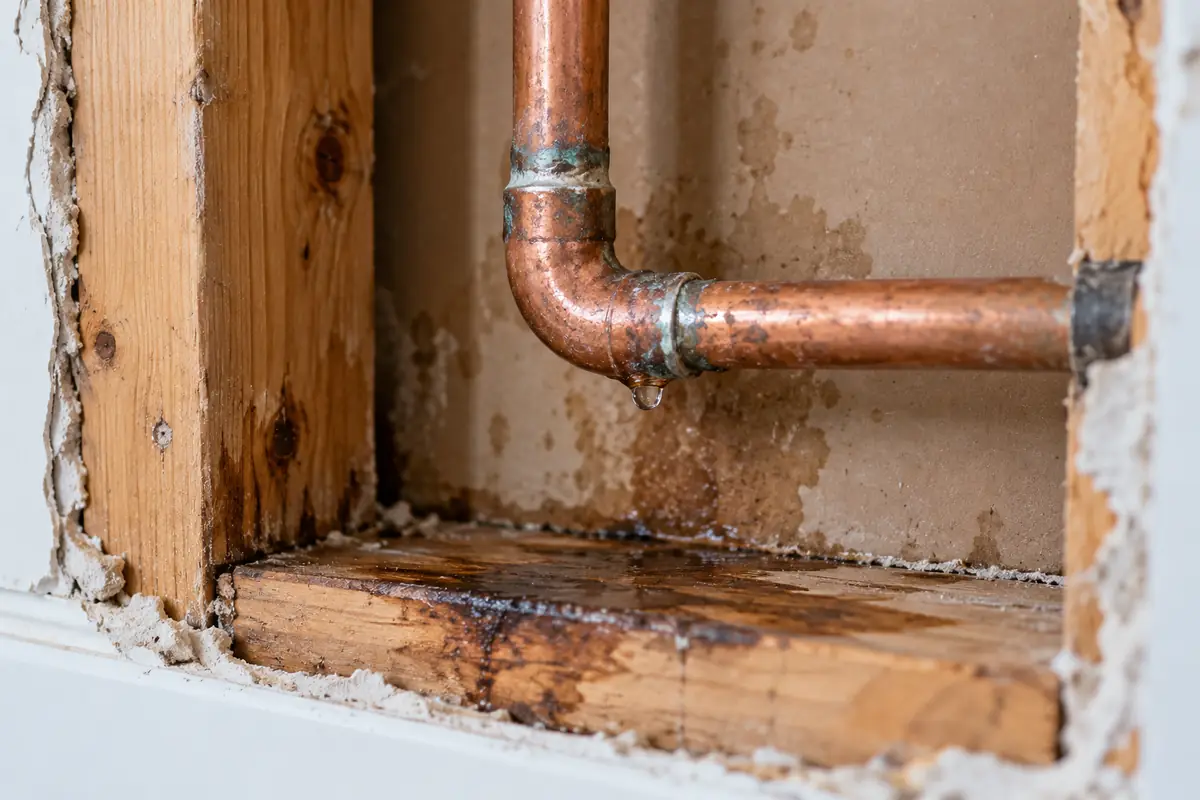
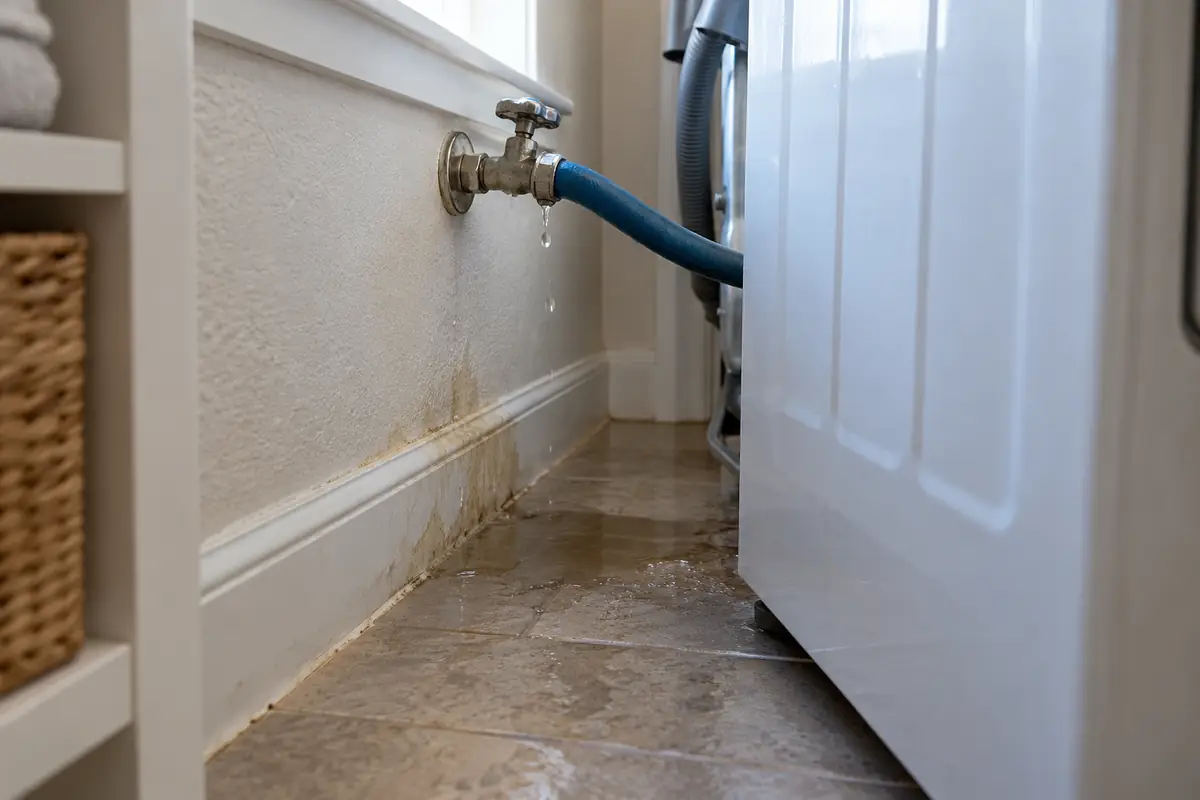
Plumbing leaks are among the most frequent culprits. Slow drips from supply lines, drain pipes, and fittings inside walls can soak surrounding materials for weeks before anyone notices. Leaks around showers, tubs, and sinks can also allow water to seep into adjacent walls.
Appliances and mechanical systems add more risk. Water heaters, washing machines, dishwashers, and refrigerator lines can all leak, and air conditioning condensate lines can back up or drip into walls and ceilings. Roof leaks and damaged windows may allow rainwater to travel down inside walls during winter storms. Any water event, from a burst pipe to firefighting efforts, can also leave moisture trapped in building materials.
Recognizing Warning Signs of Mold Behind Walls
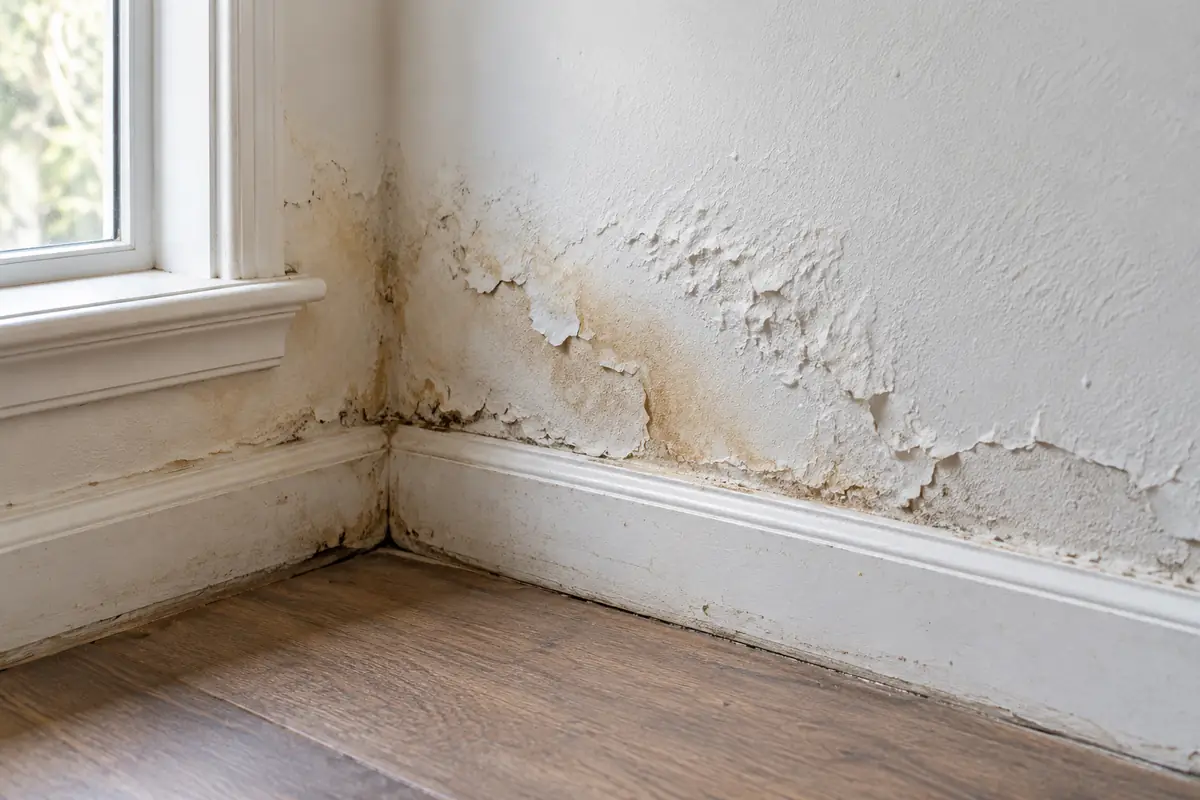
Because mold inside walls is out of sight, homeowners must rely on indirect clues. One of the most common signs is a persistent musty or earthy odor, especially in a specific room or near a particular wall.
Visible changes to walls and ceilings can also indicate hidden moisture and mold. Look for water stains, discoloration, bubbling or peeling paint, warped baseboards, or drywall that feels soft or crumbly. Small dark spots near the bottom of walls or around fixtures may be mold that has worked its way to the surface.
Other clues include higher-than-normal humidity in a room or allergy-like symptoms that seem to improve when you leave the house. If you notice any of these signs, especially after a known leak, it’s wise to have the area professionally inspected.
Acting Quickly After Water Damage
Time is one of the most important factors in preventing mold. The longer building materials stay wet, the greater the chance that mold will take hold inside walls and other hidden spaces.
According to the Centers for Disease Control and Prevention, when water gets into your home, wet items should be cleaned and dried or removed within 24 to 48 hours to prevent mold from growing. That narrow window makes a fast response essential, especially when water has reached drywall, insulation, or framing.
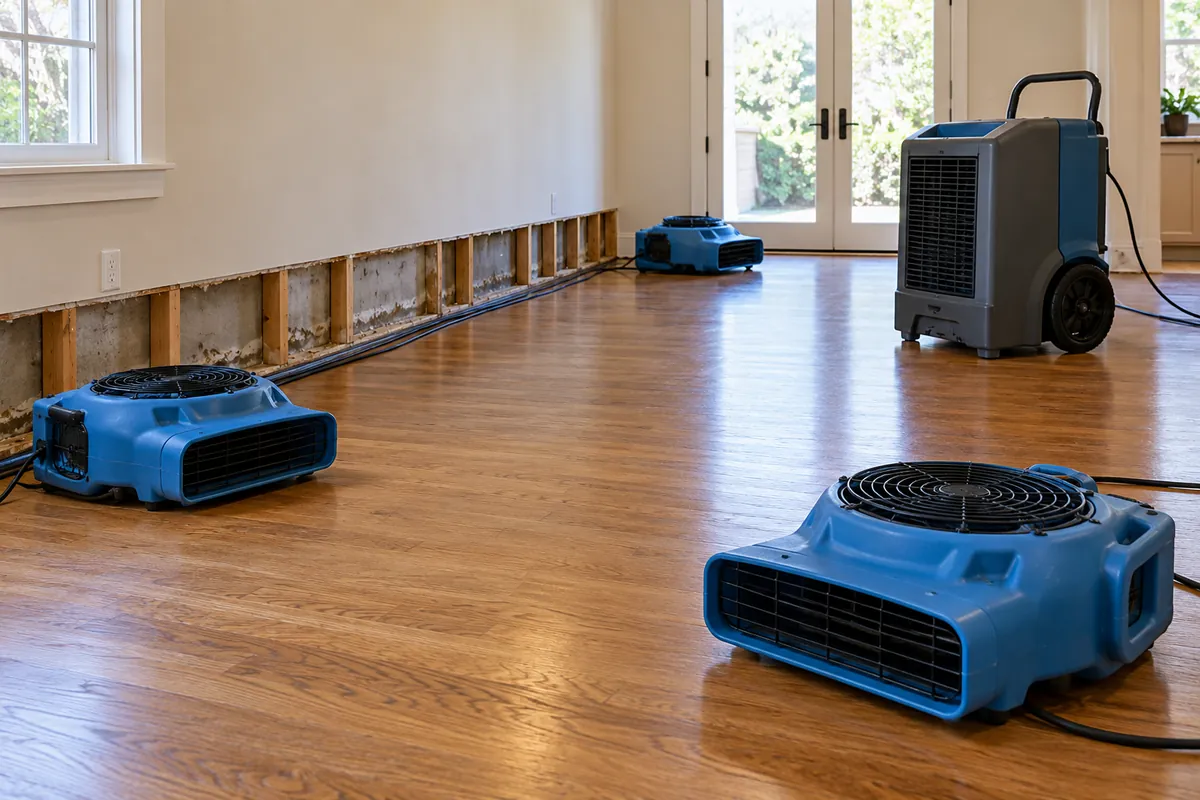
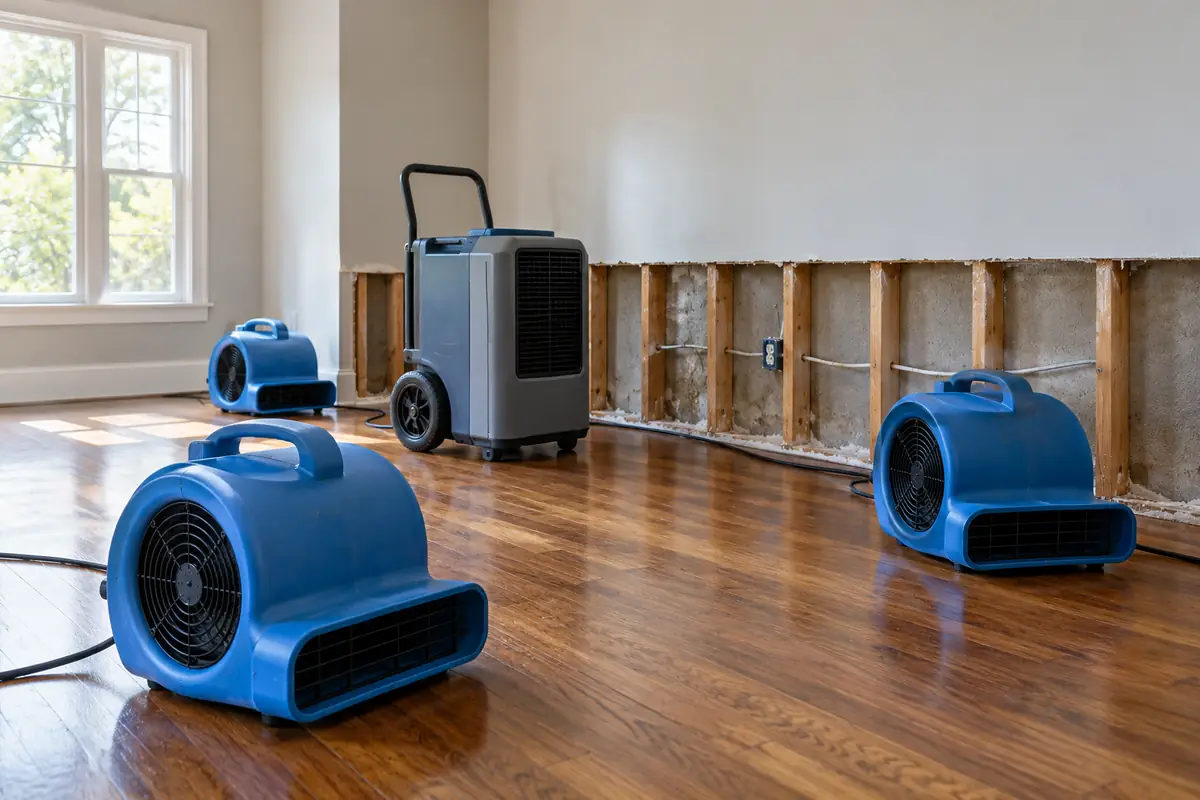
Professional water damage restoration teams use extraction equipment, industrial dehumidifiers, and air movers to dry structures thoroughly. Moisture meters and thermal imaging help locate water that has spread into walls and floors, ensuring that drying continues until materials reach safe moisture levels rather than simply looking dry on the surface.
Avoiding Common Mistakes With Hidden Mold
When homeowners suspect mold, a quick fix can be tempting. However, some common approaches can make the problem worse or allow it to return.
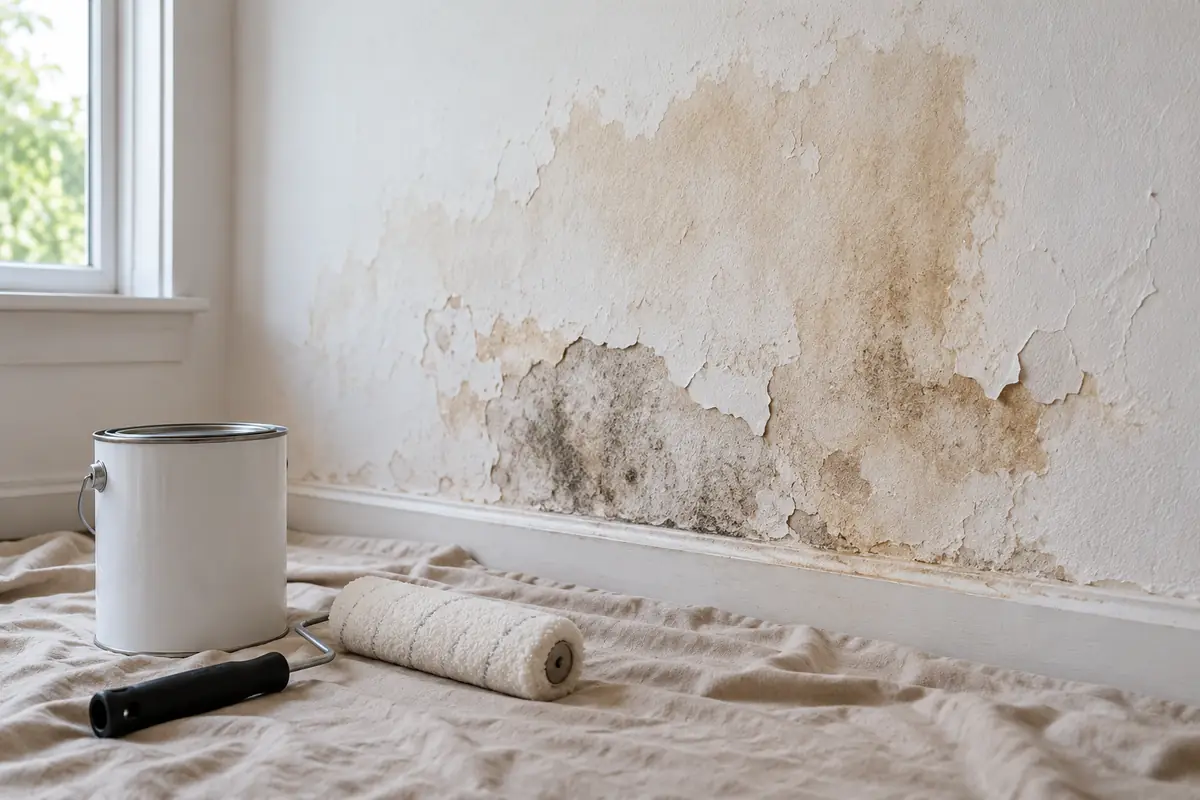
Painting over water stains or visible spots only hides the issue. Mold can continue growing underneath, and stains often reappear. Spraying cleaners on the wall surface doesn’t reach mold growing inside the cavity, and porous materials like drywall and insulation often need to be removed rather than cleaned.
Relying on Professional Mold Remediation
Effective mold remediation involves more than removing visible growth. Our mold removal service begins with a thorough inspection to locate moisture sources and determine how far mold has spread, using tools like moisture meters and thermal imaging.
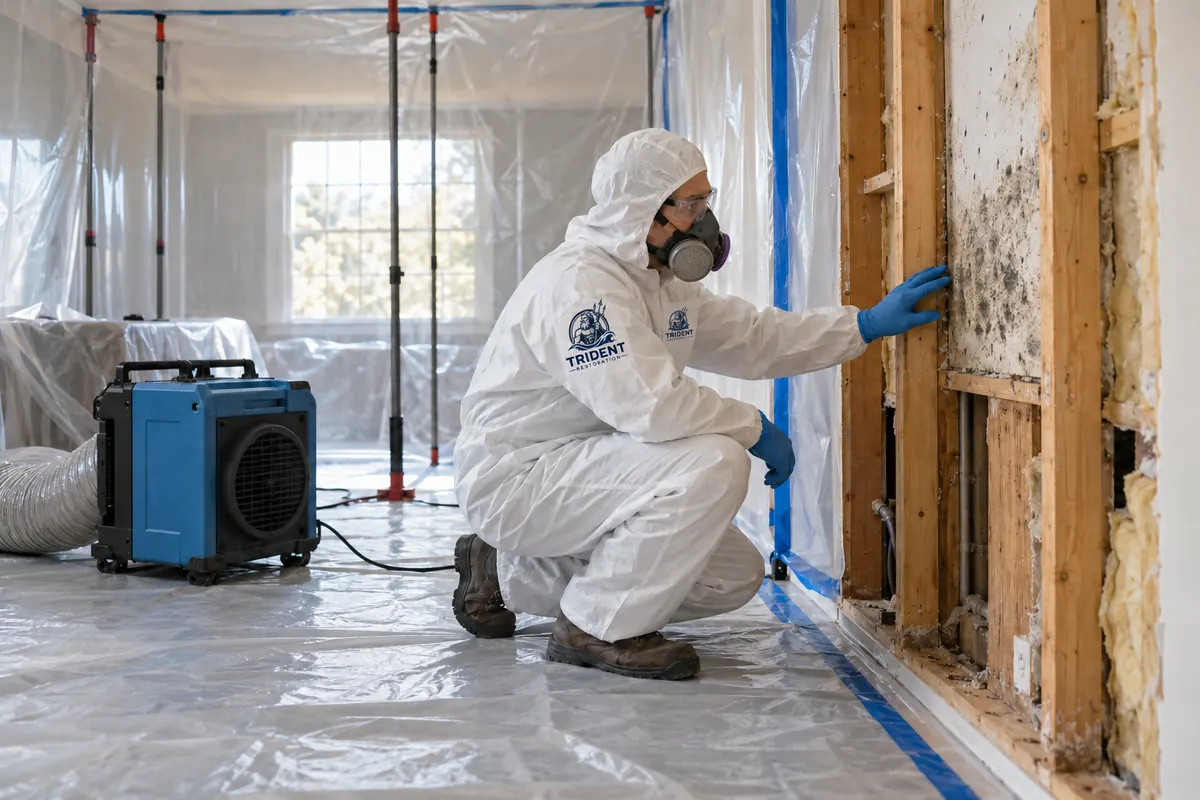
Once the scope is clear, technicians set up containment to prevent spores from traveling to unaffected areas. Contaminated materials are carefully removed, and remaining surfaces are cleaned and treated. The underlying moisture problem must also be repaired, since mold will return if the water source isn’t fixed. Finally, affected areas are dried and restored so your home is safe and comfortable again.
Working with an IICRC-certified team ensures that remediation follows industry standards. A professional mold removal service also documents the damage and work performed, which can be helpful when working with your insurance company.
Restoring Your Home With Trident Restoration
Water damage can absolutely cause mold behind your walls, and it often grows unseen until the problem becomes significant. Hidden leaks, lingering moisture, and delayed drying all create conditions where mold thrives. Recognizing warning signs, acting quickly after water damage, and relying on trained professionals are the best ways to protect your home.
At Trident Restoration, our locally owned, IICRC-certified team brings more than 25 years of experience to homeowners throughout Riverside and the Inland Empire. We provide 24/7 emergency water damage restoration and a thorough mold removal service using eco-friendly materials, and we work directly with all insurance companies to make the process easier. Reach out to us today for a free estimate and honest timeline from our mold removal service team.

Frequently Asked Questions
How do I know if there is mold behind my walls?
Common signs include a musty odor, water stains, bubbling or peeling paint, warped baseboards, and soft or discolored drywall. A professional inspection using moisture meters and thermal imaging can confirm hidden moisture and mold.
How long does it take for mold to grow after water damage?
Mold can begin growing quickly when materials stay wet. The CDC recommends cleaning and drying or removing wet items within 24 to 48 hours after water gets into your home to prevent mold growth.
Does Trident Restoration offer mold removal in the Inland Empire?
Yes. Our mold removal service includes inspection, containment, removal of contaminated materials, drying, and restoration for homes throughout Riverside and the Inland Empire, with 24/7 emergency availability.

24/7 Emergency Service
Concerned about hidden mold?
Contact our Riverside and Inland Empire restoration team for fast, honest help and a free estimate.
Call (951) 451-1795Request a free estimate →